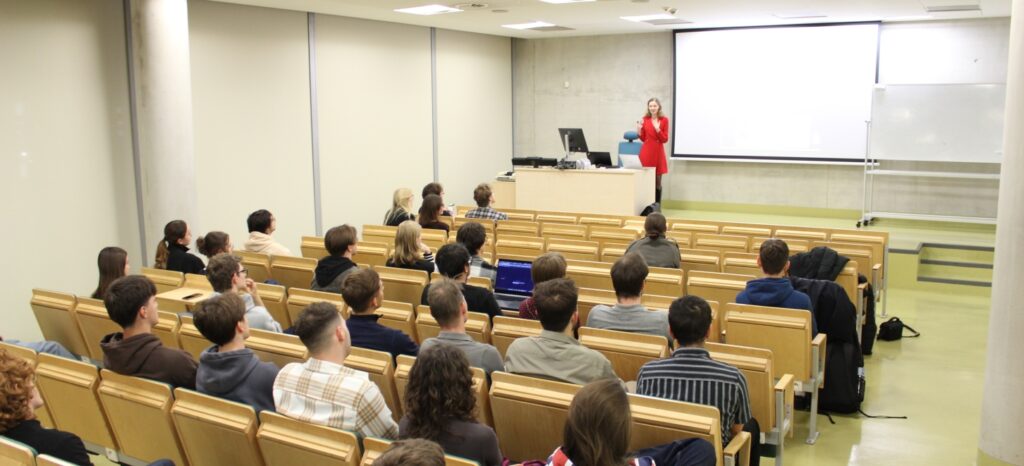
On 22 October 2026, SRG Data Science held its inaugural meeting, during which the student research society’s plans and key priorities for the 2026/2027 academic year were presented. Over the coming months, the society will focus on developing practical skills in data analysis, Python programming and artificial intelligence.
Planned activities include workshops covering Python fundamentals, the use of popular libraries, and hands-on projects involving data processing and analysis. The programme will also feature lectures and workshops led by industry professionals.
During the meeting, Dr Włodzimierz Lewoniewski demonstrated how open data and publicly available knowledge sources can be used in analytical and research projects. One example is Mapa Fantastyki (Map of Speculative Fiction), an interactive map visualising approximately 100,000 articles from the Polish- and English-language editions of Wikipedia. The project covers a broad range of fantasy, science fiction and related topics, including literature, films, television series, games, comics, anime, fictional characters and creators.
Another part of the meeting focused on natural language processing (NLP) and the capabilities of modern artificial intelligence models. Ewelina Księżniak discussed how AI models process and understand Polish, interpret meaning and context, recognise an author’s writing style, and how the performance of language models can be evaluated. As a practical example, Task 3 of the PolEval 2026 competition, “Adversarial Style Modification: Probing the Human–AI Perception Gap“, was presented. The task involves modifying text to make it more difficult for automated systems to identify an author’s writing style while preserving the original meaning and keeping the style recognisable to human readers. This example provided a basis for discussing the challenges of text analysis and the differences between human and machine perception of linguistic features.
Participants also had the opportunity to ask questions about the society’s activities, upcoming initiatives and ways to get involved in its projects. Questions were answered by members of the SRG Data Science Board: Paulina Lange, Aniela Matusiak, Marek Śleszyński and Przemysław Więcek.
For more information about the society’s activities and upcoming events, visit the SRG Data Science Facebook page: facebook.com/SKNDataScienceUEP.