Automated Knowledge Base Construction Using Large Language Models

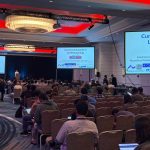
An open-access paper entitled “Pre-training Aware Directed Reasoning for Closed-Book Knowledge Base Construction” by Mikołaj Tym, a member of our Department, has been published. The paper introduces a method that uses large language models to automatically complete knowledge bases. The research was presented at a workshop held as part of the international EMNLP 2026 conference, which took place in Budapest, Hungary, from October 24 to 29, 2026.


Can Large Language Models Replace Human Annotators? Research by Our Team Presented at EMNLP 2026

The 2026 Conference on Empirical Methods in Natural Language Processing (EMNLP 2026) took place in Budapest, Hungary, from 24 to 29 October 2026. It is one of the leading international research conferences in the field of natural language processing (NLP). During the conference, Dr. Milena Stróżyna presented the paper entitled “Multi-Model Framework for Sentiment Annotation: A Use Case of Multilingual Wikipedia”. The study introduces an approach in which multiple artificial … Read More

SRG Data Science: Inaugural Meeting 2026/2027

On 22 October 2026, SRG Data Science held its inaugural meeting, during which the student research group’s plans and key priorities for the 2026/2027 academic year were presented. Over the coming months, the research group will focus on developing practical skills in data analysis, Python programming and artificial intelligence.

ACL 2026: Success in an International Narrative Similarity Competition

A system developed by our researcher secured second place in the international SemEval-2026 competition focused on narrative similarity. Its developer, Marcin Sawiński, presented his research at ACL 2026 in San Diego, United States, one of the world’s leading international conferences on natural language processing.

Reducing the Influence of Content on Syllogistic Reasoning in Large Language Models

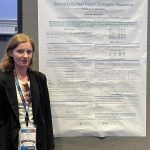
During the international ACL 2026 conference in San Diego, USA, Ewelina Księżniak presented research findings on reducing content bias in syllogistic reasoning by large language models. Her poster was based on the paper entitled “Team ewelinaksiez at SemEval-2026 Task 11: Reducing Content Bias in Syllogistic Reasoning via Semantic Abstraction”.

Artificial Intelligence in Sentiment Analysis of Multilingual Wikipedia: Classifiers vs. Large Language Models

An open-access paper by researchers from our Department entitled “Evaluating Multilingual Sentiment Classifiers Using an LLM-Annotated Wikipedia Benchmark” has been published. Authors of the work: Dr. Milena Stróżyna, Dr. Włodzimierz Lewoniewski, Izabela Czumałowska. The paper was presented at ACL 2026 in San Diego, held from July 2 to 7, 2026.

Presentation at EACL 2026

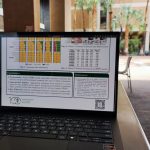
Between March 24-29, 2026, Ewelina Księżniak participated in EACL 2026 (the 19th Conference of the European Chapter of the Association for Computational Linguistics) – one of the leading European scientific conferences in the field of natural language processing, bringing together researchers working in areas such as computational linguistics, artificial intelligence, and text analysis. This year’s edition of the conference took place in Rabat, Morocco.

Analyzing Wikipedia Neutrality Using Artificial Intelligence

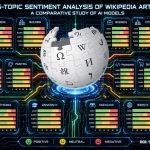
An article by our researchers, titled “Cross-Topic Sentiment Analysis of Wikipedia Articles: A Comparative Study of AI Models“, has been published. The study focuses on one of Wikipedia’s core principles: the neutral point of view (NPOV), which requires information to be presented impartially. The publication demonstrates how modern AI methods can support the analysis of information quality on a global scale, while also revealing the complexity and challenges behind the … Read More

Research trends in blockchain and crypto-assets

A study authored by our researchers, dedicated to the analysis of research trends in the fields of blockchain technology and crypto-assets, has been published in open access on the Elsevier publishing platform. The study analyzes more than 50,000 scientific publications from the years 2015–2025, and its findings provide a unique, data-driven picture of how blockchain research has evolved over time.

Scientific Presentations: From Blockchain Trends to the Quality of Visualizations in Wikipedia

At the KES 2025 international scientific conference, papers authored by our researchers were presented, reporting the results of research on the evolution of scientific trends in blockchain technology and on the quality and distribution of data visualizations in the Polish Wikipedia.