Analyzing Wikipedia Neutrality Using Artificial Intelligence

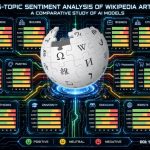
An article by our researchers, titled “Cross-Topic Sentiment Analysis of Wikipedia Articles: A Comparative Study of AI Models“, has been published. The study focuses on one of Wikipedia’s core principles: the neutral point of view (NPOV), which requires information to be presented impartially. The publication demonstrates how modern AI methods can support the analysis of information quality on a global scale, while also revealing the complexity and challenges behind the … Read More

Researchers’ Night 2025: Operation InfoVerification

During Researchers’ Night 2025, the staff of the Department of Information Systems conducted workshops titled “Operation InfoVerification” that were presented in the engaging form of a field game. The event introduced participants to the process of verifying information and identifying fake news. The workshops combined elements of adventure, investigation, and logic-based challenges, immersing participants in the fascinating world of fact-checking.

Political Narratives and Misinformation During COVID-19: Insights from an Analysis of Polish Twitter

At the BIS 2025 conference, Ewelina Księżniak presented the results of a research project focused on the analysis of political narratives and misinformation spread via social media during the COVID-19 pandemic. Our researchers investigated how supporters of four Polish political parties – Law and Justice (PiS), Civic Platform (PO), Confederation, The Left (Lewica) – engaged in pandemic-related discussions. The study employed natural language processing techniques, including BERTopic and stance classification … Read More

PLLuM – Polish Open Large Language Model as a Tool for Knowledge Base Exploration (video)

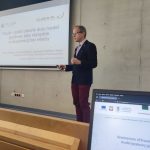
The seventh AI Transformations seminar titled “PLLuM – Polish Open Large Language Model as a Tool for Knowledge Base Exploration” was held at Poznań University of Economics and Business. The speaker was Prof. Maciej Piasecki from the Department of Artificial Intelligence at Wrocław University of Science and Technology, who coordinates the PLLuM (Polish Large Language Model) project. Prof. Piasecki presented insights into the development of a fully open Polish language … Read More

First place in the 29th PUEB Foundation competition for the best bachelor’s and engineering thesis

In the 29th edition of the UEP Foundation’s competition for the best bachelor’s and engineering thesis defended at the Poznań University of Economics and Business in the 2023/2024 academic year, the thesis titled “Detecting Human Faces Generated by Artificial Intelligence Models” won first place. The author of the thesis: Patryk Danielewicz, the supervisor: Prof. Krzysztof Węcel.

AI Transformations: Artificial Intelligence in Detecting Fake News

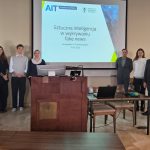
The fourth seminar on artificial intelligence and digital transformation was devoted to the issue of automatic detection of fake news. On February 24, 2025, during the meeting, a research team from the Department of Information Systems presented the results of the OpenFact project, developed at the Poznań University of Economics and Business (PUEB). The aim of the project is to create innovative solutions using artificial intelligence (AI) to identify potentially … Read More

Supporting fact-checking process with IT tools

A research paper entitled “Supporting fact-checking process with IT tools” has been published under open access. The study presents a detailed analysis of the fact-checking process, based on a literature review and interviews with organizations specializing in this field. This combined theoretical knowledge with practical experiences of experts, which allowed to identify research gaps and challenges in current information verification methods.

Exploring the Challenges and Potential of Generative AI

A scientific article titled “Exploring the Challenges and Potential of Generative AI: Insights from an Empirical Study” has been published under open access. As part of this work, an experiment was conducted to examine to what extent content generated by GenAI can be considered reliable (i.e., free of false information) and how easily GenAI can be manipulated into producing misinformation.

CyberEXPERT 2024: Artificial Intelligence and Quantum Computing for Cybersecurity (video)

Prof. Witold Abramowicz participated as a panelist at the CyberEXPERT 2024 conference. During the conference, our scientist also gave a lecture entitled “Artificial Intelligence as a Tool for Digital Transformation”. The event was attended by leading experts from Poland and abroad, discussing and presenting strategies for a safer digital future.

Semantic mapping of disinformation: identifying fake news topics

The scientific article of our Department’s employees entitled “Sentence Embeddings and Semantic Entity Extraction for Identification of Topics of Short Fact-Checked Claims” has been published in open access. The paper describes an approach to assigning topics to claims verified by fact-checking agencies.