Artificial Intelligence in Sentiment Analysis of Multilingual Wikipedia: Classifiers vs. Large Language Models

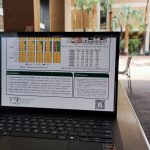
An open-access paper by researchers from our Department entitled “Evaluating Multilingual Sentiment Classifiers Using an LLM-Annotated Wikipedia Benchmark” has been published. Authors of the work: Dr. Milena Stróżyna, Dr. Włodzimierz Lewoniewski, Izabela Czumałowska. The paper was presented at ACL 2026 in San Diego, held from July 2 to 7, 2026.
Combining multiple attack methods for effective adversarial text generation

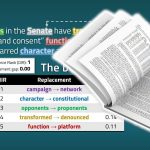
An article by our scientists entitled “OpenFact at CheckThat! 2024: Combining Multiple Attack Methods for Effective Adversarial Text Generation” has been published in open access. The paper describes the approach that won first place in an international competition in the area of ​​information credibility.

Participation in an international competition in the area of analysis of multi-author writing style

Scientists from the Department of Information Systems took part in an international competition for the analysis of multi-author writing style – PAN 2024. PAN is a series of scientific events related to stylometric analysis and forensic linguistics, organized during the CLEF 2024 conference. The competition task was to detect places where the author changes in a text written by several authors.

First place in an international competition in the field of information credibility

A team of scientists from the Department of Information Systems at the Poznań University of Economics and Business took part in the “CheckThat! 2024” organized as part of the international conference CLEF (Conference and Labs of the Evaluation Forum). The goal was to verify the robustness of popular text classification approaches used for credibility assessment problems.

First place in the international competition CLEF-2023 CheckThat! Lab

The OpenFact project team took part in the CheckThat! organized as part of the international conference CLEF 2023 (Conference and Labs of the Evaluation Forum). The method proposed by our scientists took first place. This method detects English sentences that need to be reviewed because of potential misleading and therefore are worth fact-checking.